
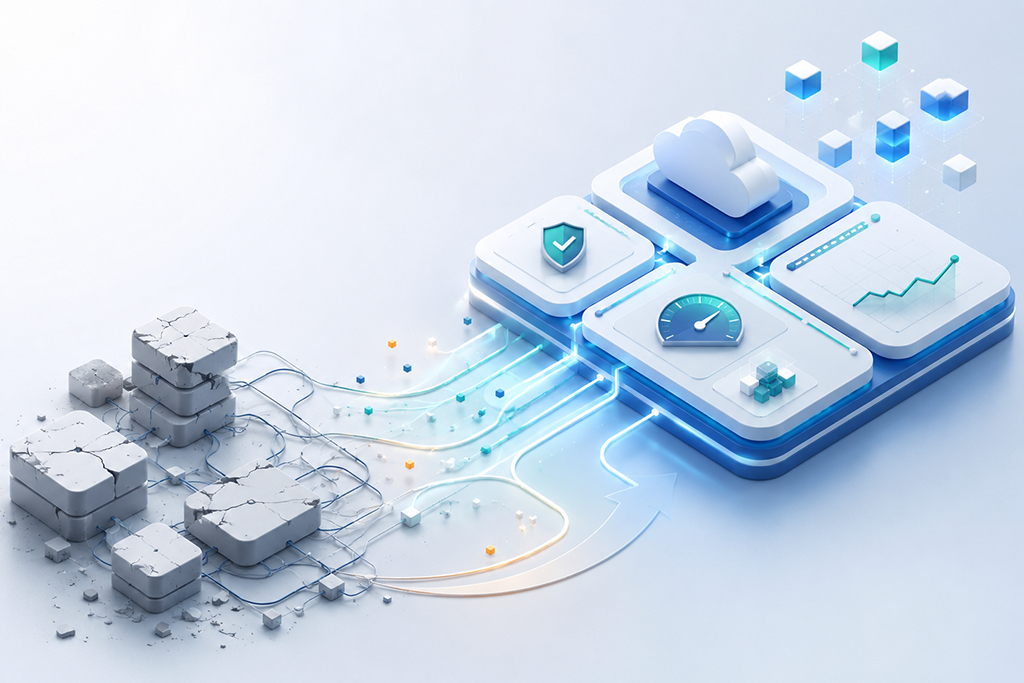
Technical debt remediation creates the most value when it is tied to business outcomes.
The goal is not to clean up old systems simply because they are old. The goal is to reduce delivery friction, improve scalability, control operating cost, strengthen maintainability, and make the application easier to extend when the business needs to move.
For growing organizations, technical debt becomes a real problem when it slows the business down.
That is why modernization should start with impact:
Which technical issues are creating the most business friction, and which improvements will create the clearest path forward?
Technical Debt Is Not Just a Technology Problem
Technical debt is often described as the result of decisions that make software harder to change later. Martin Fowler describes technical debt as internal software quality issues that make future changes harder, even when those issues may not be visible to users at first.
That distinction matters.
A legacy system can still work. An old application can still support real users. A spreadsheet-based process can still produce the report people need. A framework can be outdated and still functional.
The problem is not always immediate failure.
The problem is what happens over time:
- Every change takes longer than expected.
- New developers struggle to work in the system.
- Small updates create unexpected issues.
- Infrastructure becomes harder to scale.
- Costs become harder to control.
- Leaders lose confidence in timelines.
- Teams delay needed improvements because the system feels too risky to touch.
At that point, technical debt is no longer just an engineering concern. It becomes an operational constraint.
Cleanup Alone Is Not a Strategy
Many organizations know they have technical debt. The hard part is deciding what to do about it.
A generic cleanup list is rarely enough to earn leadership support. “We need to modernize the codebase” may be true, but it does not explain why the work matters now.
A better business case connects technical debt to visible consequences:
- Is the system slowing new feature delivery?
- Is it creating avoidable support burden?
- Is it limiting the number of users the application can support?
- Is it increasing infrastructure or licensing cost?
- Is it preventing cloud, AI, automation, reporting, or integration initiatives?
- Is it becoming harder to find people who can maintain the technology?
The strongest modernization initiatives are not framed as “cleanup.” They are framed as enabling the next business outcome.
Instead of saying:
“We need to update this application.”
Say:
“This application is becoming harder to scale, more expensive to operate, and slower to change. Modernizing it gives us a stronger foundation for growth.”
That is the difference between a technical request and a business decision.
Prioritize Technical Debt by Business Impact
Not all technical debt deserves immediate attention.
Some debt is annoying but manageable. Some creates daily drag. Some creates future risk. Some blocks the next phase of growth.
The practical question is not, “What is old?”
The practical question is:
What is costing us momentum?
A useful prioritization model looks at five areas.
- Scalability
Can the system support the number of users, transactions, reports, or workflows the business now requires?
If growth creates performance issues or infrastructure strain, technical debt is directly affecting the business.
- Maintainability
Can the team update the application without excessive rework, undocumented knowledge, or fear of breaking unrelated functionality?
If every change feels risky, the system is limiting delivery speed.
- Cost
Is the current infrastructure, support model, manual process, or maintenance pattern more expensive than it needs to be?
Cost does not only mean hosting bills. It can also include developer time, support burden, manual work, delayed releases, and missed opportunities.
- Security and reliability
Does the current system create avoidable exposure, fragile recovery, unsupported technology risk, or operational instability?
Security should not be treated as a late-stage concern. It should be part of the modernization decision from the beginning.
- Business enablement
Is the debt blocking new products, integrations, automation, analytics, AI-readiness, or better customer experiences?
If the answer is yes, modernization is not just an IT improvement. It is a business enable
Choose the Right Modernization Path
Technical debt remediation does not always require a full rebuild.
Sometimes the right answer is to rehost. Sometimes it is to replatform. Sometimes it is to refactor. Sometimes it is to rebuild. Sometimes the smartest move is to leave a stable system alone until there is a stronger business case.
Microsoft’s application modernization guidance describes several modernization paths, including rehost, replatform, refactor, and rebuild, with each option serving different goals depending on the workload and business need.
That is important because many modernization projects become too large too quickly.
A full rewrite may sound clean, but it can also introduce cost, risk, and disruption. A more practical roadmap may start with the highest-value change first:
- Move the application to a more scalable infrastructure model.
- Update a framework that is limiting supportability.
- Replace a fragile desktop application with a web application.
- Reuse common components across related applications.
- Improve reporting or workflow steps that create the most manual effort.
- Add monitoring and operational visibility.
- Modernize one application layer before rebuilding the entire system.
The best path is the one that reduces risk while creating visible progress.
Modernizing Older Applications Around Practical Outcomes
In one ILM engagement with a university client, the work involved modernizing older applications and moving toward a more maintainable, cloud-ready foundation.
The confirmed work included moving applications from on-prem infrastructure to Azure, which improved cost efficiency and made the applications easier to scale based on the number of users. The broader modernization effort also included updating applications from .NET Framework to .NET Core and moving an older desktop application toward a modern web application.
This is a strong example because the modernization was not just about replacing older technology. It was tied to practical outcomes:
- Easier scaling based on user volume
- Improved cost efficiency through cloud migration
- More maintainable application architecture
- Movement from older application models toward modern web applications
- A stronger foundation for future updates
The lesson is simple: technical debt remediation is easier to justify when the improvement is connected to how the business actually operates.
A framework upgrade matters more when it improves supportability.
A cloud migration matters more when it improves cost control and scalability.
A desktop-to-web modernization matters more when it improves accessibility, maintainability, and long-term usability.
Cloud Migration Does Not Automatically Solve Technical Debt
Cloud can be a powerful part of modernization, but it is not a magic fix.
Moving an application to the cloud without addressing architecture, cost controls, security, monitoring, or maintainability can simply move the same problems into a new environment.
Microsoft’s Cloud Adoption Framework emphasizes aligning cloud adoption with business goals and mapping business drivers to cloud outcomes.
That is the right mindset.
Cloud modernization should answer business questions:
- What outcome are we trying to create?
- What workload should move first?
- What needs to change before migration?
- What should remain as-is for now?
- What risks need to be reduced before modernization accelerates?
- How will we measure success after the move?
This is where many organizations need a clearer roadmap. They know modernization matters, but they do not yet know which move should happen first.
How to Build a Business-Aligned Technical Debt Roadmap
A practical technical debt roadmap should help leaders make decisions, not just understand problems.
Start with these five questions.
- What business process depends on this system?
If the system supports revenue, reporting, customer experience, operations, compliance, or decision-making, its technical debt has higher business relevance. - What is the debt costing us today?
Look beyond technology. The cost may show up as manual effort, delayed releases, support tickets, onboarding difficulty, infrastructure spend, or user frustration. - What will the business need from this system next?
A system that works today may not be ready for more users, new integrations, self-service reporting, automation, or AI-enabled workflows. - What is the least disruptive path forward?
The answer may be rehosting, replatforming, refactoring, rebuilding, replacing, or retiring. The right choice depends on business value, risk, timeline, and system complexity. - How will we measure progress?
Modernization should create visible progress. That might include faster releases, reduced manual effort, better scalability, improved cost visibility, lower support burden, or a clearer path to future enhancements.
Without measurement, modernization can look like endless cleanup.
With measurement, it becomes a business improvement plan.
How ILM Helps
ILM helps organizations modernize legacy applications without forcing unnecessary disruption.
That can include assessing current systems, identifying modernization priorities, moving workloads to cloud infrastructure, updating aging frameworks, rebuilding desktop applications as web applications, improving maintainability, and creating a roadmap tied to business outcomes.
The goal is not modernization for its own sake.
The goal is to help teams reduce technical drag, control risk, and build a stronger foundation for future growth.
Technical debt becomes easier to address when leaders can see the connection between the system, the business process, and the outcome. That is where modernization becomes more than cleanup.
It becomes a practical path to better delivery, better scalability, and better business confidence.
FAQ
What is technical debt remediation?
Technical debt remediation is the process of addressing technology decisions, outdated systems, architecture issues, or manual processes that make software harder to maintain, scale, secure, or extend.
Should every legacy application be modernized?
No. Some legacy applications are stable and do not need immediate investment. Modernization should be prioritized when the system creates business friction, operational risk, cost concerns, or limits future growth.
Is cloud migration the same as application modernization?
No. Cloud migration moves workloads to a cloud environment. Application modernization may include cloud migration, but it can also involve architecture updates, framework upgrades, refactoring, rebuilding, automation, monitoring, and process improvements.
How should leaders prioritize technical debt?
Leaders should prioritize technical debt based on business impact: scalability, maintainability, cost, security, reliability, and the system’s role in enabling future initiatives.
If your legacy applications are slowing delivery, increasing cost, or making it harder to scale, ILM can help you identify which technical debt matters most and build a practical modernization path forward. Book a call.