
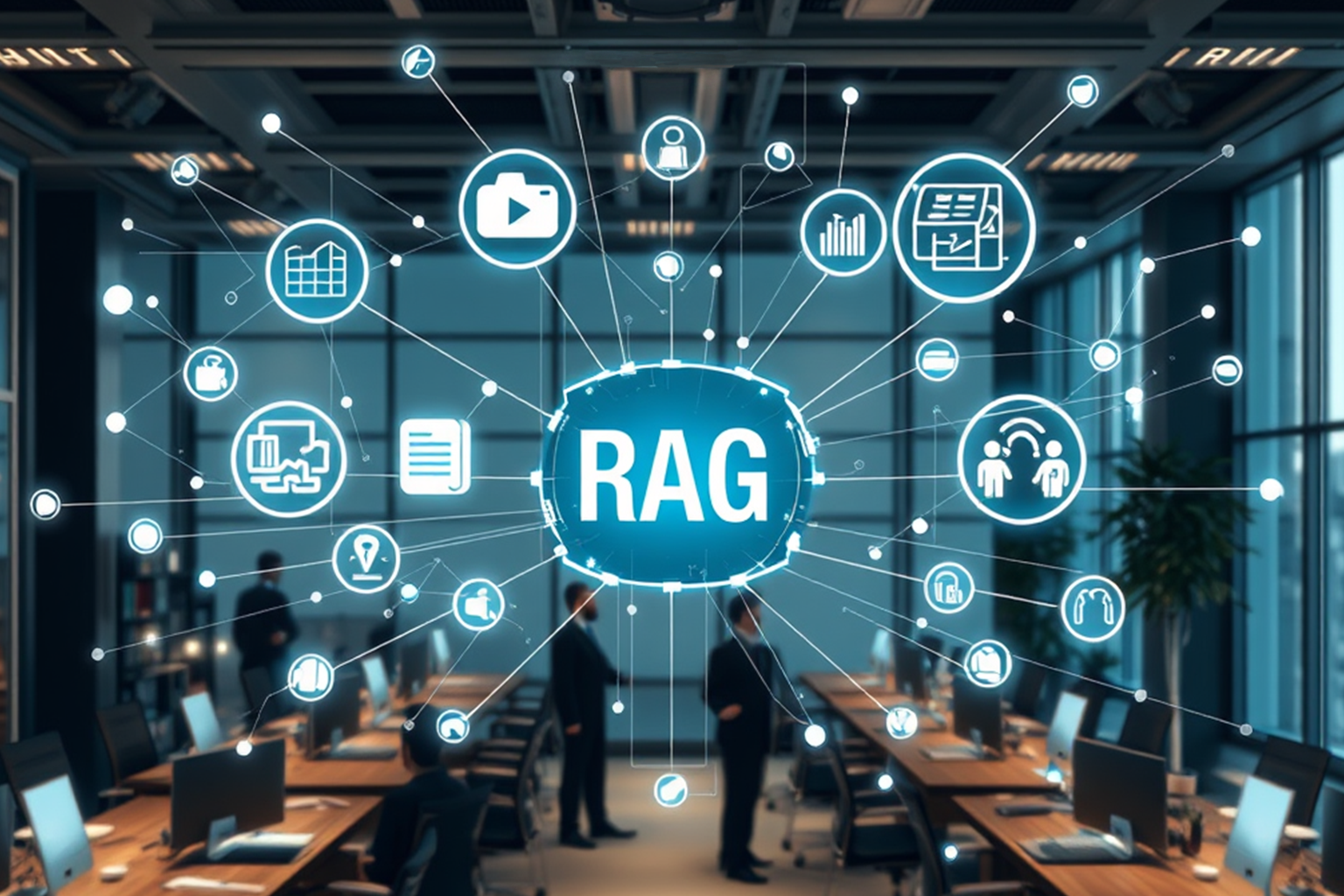
RAG is becoming the default enterprise AI approach
For most organizations, the fastest and safest way to get value from AI is not replacing legacy systems. It is using retrieval.
Retrieval augmented generation (RAG) allows AI to pull answers from trusted internal sources such as documents, databases, and knowledge bases while keeping human review in place where risk is high.
For executives, the challenge is not adopting AI. The challenge is making AI work inside real systems without introducing risk, compliance issues, or loss of control.
The real problem: unrealistic AI transformation strategies
Many organizations are pushed toward large-scale transformation efforts that attempt to replace existing systems.
This approach often fails because of:
- cost and risk
- custom dependencies
- regulatory requirements
- operational disruption
A more practical path is to add intelligence on top of what already exists. Retrieval enables this by creating a governed layer that connects to existing systems instead of replacing them.
What is RAG in business terms
Retrieval augmented generation is a pattern where AI:
- searches approved internal sources such as documents, policies, tickets, and databases
- retrieves the most relevant information
- generates an answer grounded in those sources
- provides citations or traceability
- optionally routes output through human approval
This approach reduces hallucinations because responses are based on real data rather than generated in isolation.
Why RAG works well with legacy systems
Legacy systems are difficult to replace quickly. Common constraints include:
- high replacement cost
- deeply embedded workflows
- regulatory and compliance requirements
- lack of clean migration paths
RAG avoids the need for full system replacement. Instead, it creates a retrieval layer that reads from existing systems and delivers faster access to information.
This allows organizations to improve efficiency without a full rebuild.
The non-negotiables for safe RAG implementation
- Permissions and least-privilege access
The system must enforce user-level permissions, especially for sensitive data such as HR, finance, legal, and customer records. - Auditability
Log what was retrieved, which sources were used, and what output was generated.
If results cannot be traced, they cannot be trusted. - Human-in-the-loop controls
Use human approval for higher-risk outputs such as external communication, reporting, or decision support. - Source quality and governance
Define authoritative sources. When sources conflict, the system should flag uncertainty and route to review rather than generate a confident but incorrect answer.
How to implement RAG: a practical rollout plan
Start with a focused, controlled approach:
- Select one workflow with clear ROI such as support responses or internal policy lookup
- Define trusted data sources and access permissions
- Build a retrieval layer with citations and logging
- Add human approval for higher-risk outputs
- Pilot with a small group and expand based on results
This approach reduces risk while delivering measurable value quickly.
What success looks like
Successful implementations result in:
- faster access to information
- reduced manual effort
- improved consistency
- clear traceability
Failed implementations often result in:
- incorrect answers delivered quickly
- reliance on unverified sources
- exposure of sensitive information
FAQ
What is RAG in enterprise AI
RAG is a method where AI retrieves relevant information from approved internal sources and uses it to generate grounded, traceable answers.
Does RAG work with legacy systems
Yes. RAG is particularly effective when legacy systems cannot be replaced. It adds a governed access layer on top of existing infrastructure.
How does RAG reduce hallucinations
RAG reduces hallucinations by grounding responses in real data, requiring citations, enforcing permissions, and enabling human review for higher-risk outputs.
AI Implementation Planning Session
If you are evaluating whether RAG is the right approach for your organization, the fastest next step is an AI Implementation Planning Session.
We help you define the workflow, map data sources, establish permissions, design governance controls, and build a pilot-to-production plan.
Move forward with a practical approach that delivers value without unnecessary risk.